Florida Pasture Renovation with a Tractor: Discs, Seed, and Spray
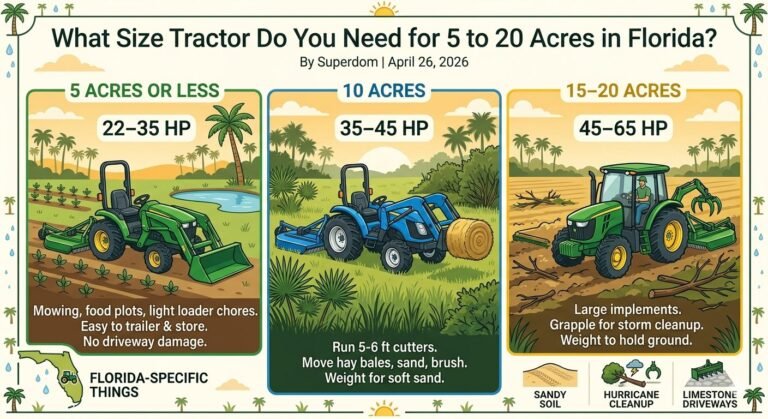
Bahia and bermuda pastures across Florida lose productivity to weeds, compaction, and thinning stands — and a renovation done with your own tractor is one of the highest-return projects a landowner can take on. Here’s the sequence and the equipment.
Step 1: Soil test, then spray
Florida’s sandy soils are chronically low in potassium and often acidic. Test first — lime takes months to work. A 3-point boom sprayer (40–60 HP tractor for a 200-gallon unit) handles broadleaf weeds like dogfennel and tropical soda apple, both of which will out-compete new seed if you skip this step.
Step 2: Light discing or aeration
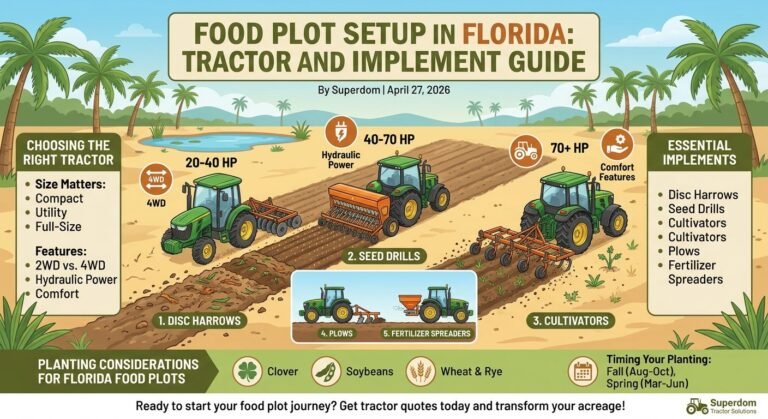
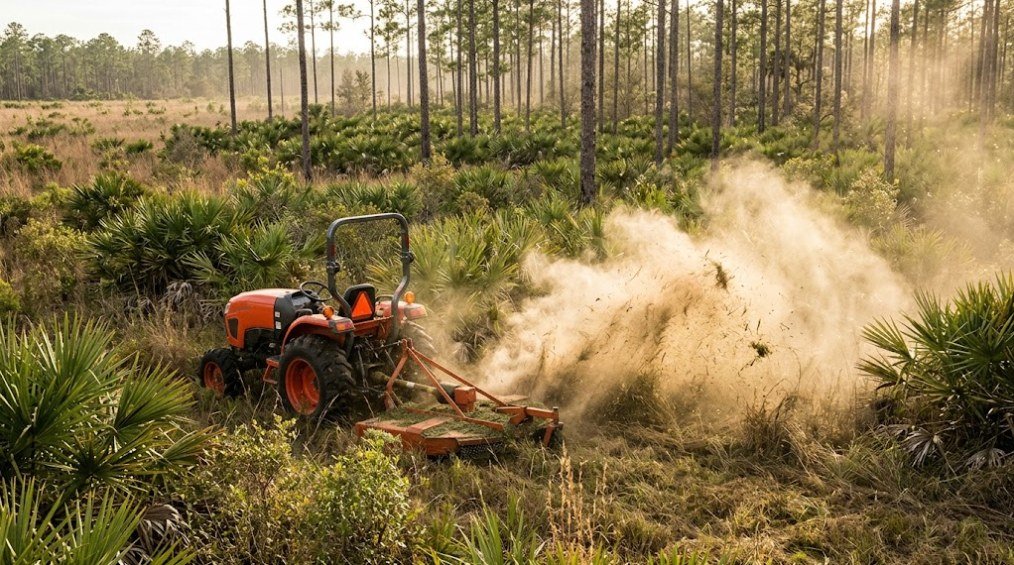
For overseeding into an existing stand, a light disc set nearly straight, or a pasture aerator, opens the soil without destroying your base grass. Full renovation of a failed pasture means aggressive discing in two passes — count on 5 HP per foot of disc width in Florida sand.
Step 3: Seed and roll
Bahia establishes from seed affordably; bermuda usually goes in as sprigs. A 3-point broadcast spreader followed by a cultipacker or roller gives the seed-to-soil contact Florida’s fast-draining sand demands. Time it to the start of summer rains — irrigation-free establishment is realistic in most of the state if you plant in late May or June.
Rent the implements you’ll only use once
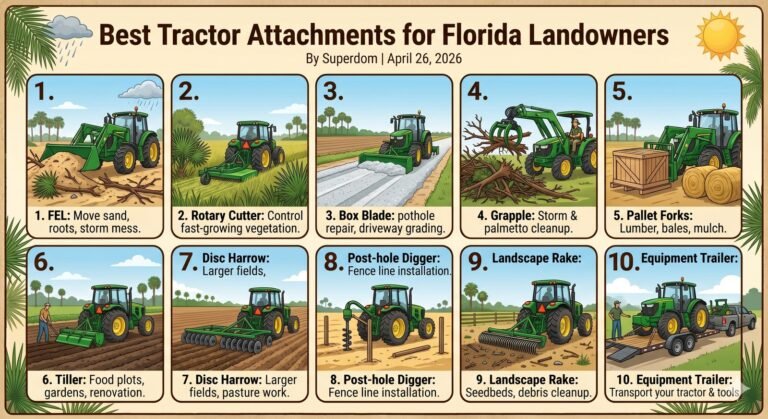
Aerators, no-till drills, and heavy discs are classic rent-don’t-buy items. Our Florida rental directory lists 250 verified locations; many county extension offices also rent no-till drills to landowners. For the tractor itself, see what size fits your acreage or get dealer quotes.