Food Plot Setup in Florida: Tractor and Implement Guide
Setting up a food plot in Florida can be both rewarding and advantageous for wildlife and personal enjoyment. Whether you’re a landowner, hobby farmer, or contractor, selecting the right tractor and implements is crucial for a successful food plot. Let’s explore what you need to know for a Florida food plot tractor setup, covering essential aspects of the process.
Understanding the Florida Landscape
Florida’s terrain varies greatly, ranging from the sandy soils of the panhandle to the rich, loamy soils in the central and southern parts of the state. Additionally, climatic conditions, including humidity and seasonal rainfall, affect soil health, crop choices, and planting schedules. Understanding these factors will help you choose the right machinery and planting techniques for your food plot.
Choosing the Right Tractor
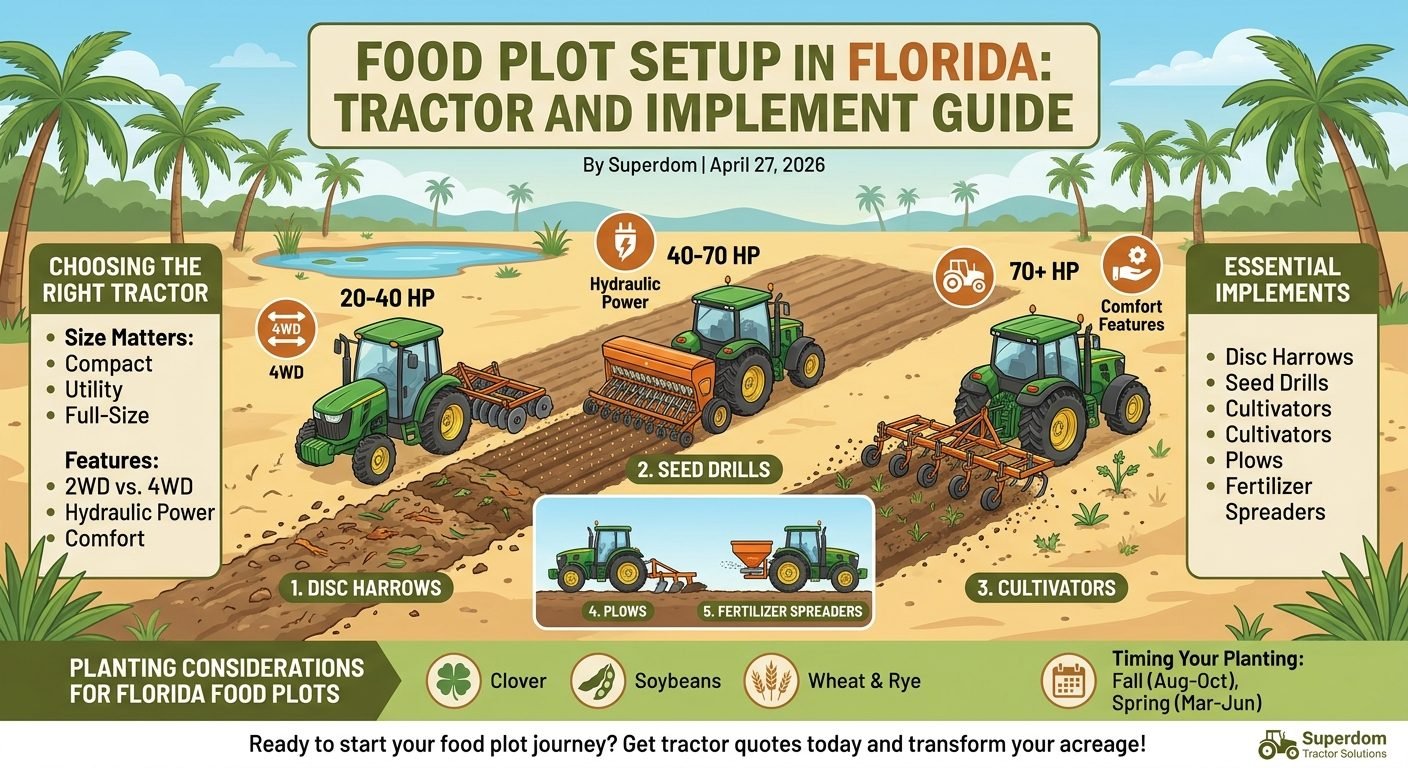
Size Matters
For a Florida food plot, the size of the tractor you need will depend on the scale of your project.
- Compact Tractors (20-40 HP): Ideal for small to medium plots (1-5 acres). They are versatile and can handle various implements without being cumbersome.
- Utility Tractors (40-70 HP): Suitable for larger plots (5-20 acres) and can handle heavier farming tasks while using a variety of implements.
- Full-Size Tractors (70+ HP): Best for extensive acreages (20+ acres) or if you’re planning to undertake intensive farming practices.
Features to Consider
- 2WD vs. 4WD: 4WD tractors offer better traction, especially in wet conditions, which can be critical in Florida’s humid climate. This feature is recommended if you plan to work on uneven terrain or during rainy seasons.
- Hydraulic Power: Look for tractors that come with robust hydraulic systems for operating multiple implements simultaneously. This will enhance versatility and efficiency for your food plot activities.
- Comfort Features: Since you may spend long hours operating the tractor, consider models with comfortable seating and user-friendly controls.
Essential Implements for Food Plot Preparation
Once you’ve chosen the appropriate tractor, equipping it with the right implements is crucial to ensure a successful food plot setup.
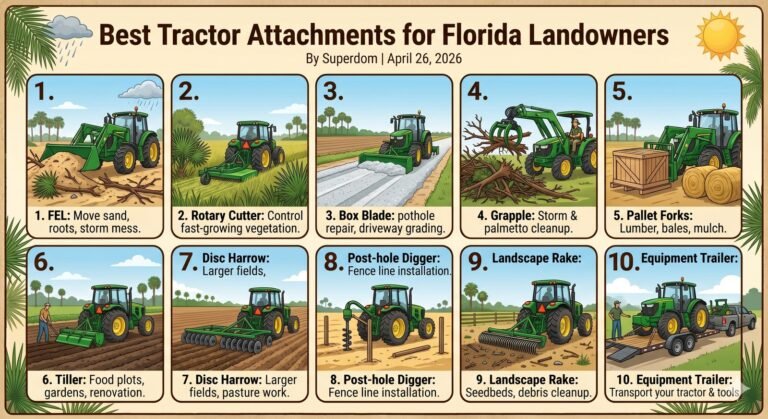
1. Disc Harrows
A disc harrow is essential for breaking up soil and mixing in organic materials. It prepares a smooth seedbed for planting by cutting and turning the soil. Look for models that can be attached to your tractor easily, with adjustable discs that can adapt to various soil types and conditions.
2. Seed Drills
Seed drills are vital for accurately planting seeds at the right depth and spacing. Some models are designed specifically for planting food plot seeds like clover, soybeans, and peas. Ensure the seed drill is compatible with your tractor to maximize efficiency.
3. Cultivators
Cultivators help aerate the soil and remove weeds. This is crucial in Florida, where certain invasive species can affect your food plot’s success. A cultivator attachment can help maintain soil structure, promoting healthy plant growth.
4. Plows
A plow is essential for turning over the soil and providing a clean seedbed. Choosing a moldboard or chisel plow can depend on your specific soil conditions. For Florida, a chisel plow can minimize soil disturbance and preserve moisture.
5. Fertilizer Spreaders
Proper fertilization is critical for robust plant growth. A fertilizer spreader can be attached to your tractor, making it easy to distribute nutrients evenly across your food plot. Look for one that offers adjustable settings for different fertilizer types.
Planting Considerations for Florida Food Plots
Selecting the Right Crops
Florida’s climate allows for a variety of food plot crops. Some popular choices include:
- Clover: Great for attracting deer during the cooler months.
- Soybeans: These are a great summer food source for wildlife.
- Wheat and Rye: Excellent for winter food plots.
Timing Your Planting
Proper timing is essential for successful food plots in Florida. The ideal planting times vary based on your crop selection:
- Fall Planting: August to October is optimal for winter crops like clover and rye.
- Spring Planting: March to June is best for warm-season crops like soybeans and corn.
Tip: Utilize local extension services for specific planting calendars tailored to your region in Florida.
Maintenance and Management
Maintaining your food plot is as essential as setting it up. Regular activities include:
- Weed Control: Stay vigilant about invasive plants and use your cultivator or herbicides where necessary.
- Soil Testing: Conduct regular soil tests to check pH levels and nutrient availability.
- Water Management: Be aware of drainage patterns and ensure that your food plot remains adequately watered but not overly saturated.
Establishing a food plot in Florida requires careful consideration of several factors, from choosing the right tractor to selecting appropriate implements and crops. The process can be labor-intensive, but with the right equipment and management practices, you can create thriving food plots that enhance both your land and local wildlife.
Ready to start your food plot journey? Whether you’re looking for the perfect Florida food plot tractor or need guidance on the best implements for your specific needs, we’re here to help. Get tractor quotes today and transform your acreage into a fertile, wildlife-friendly wonder!