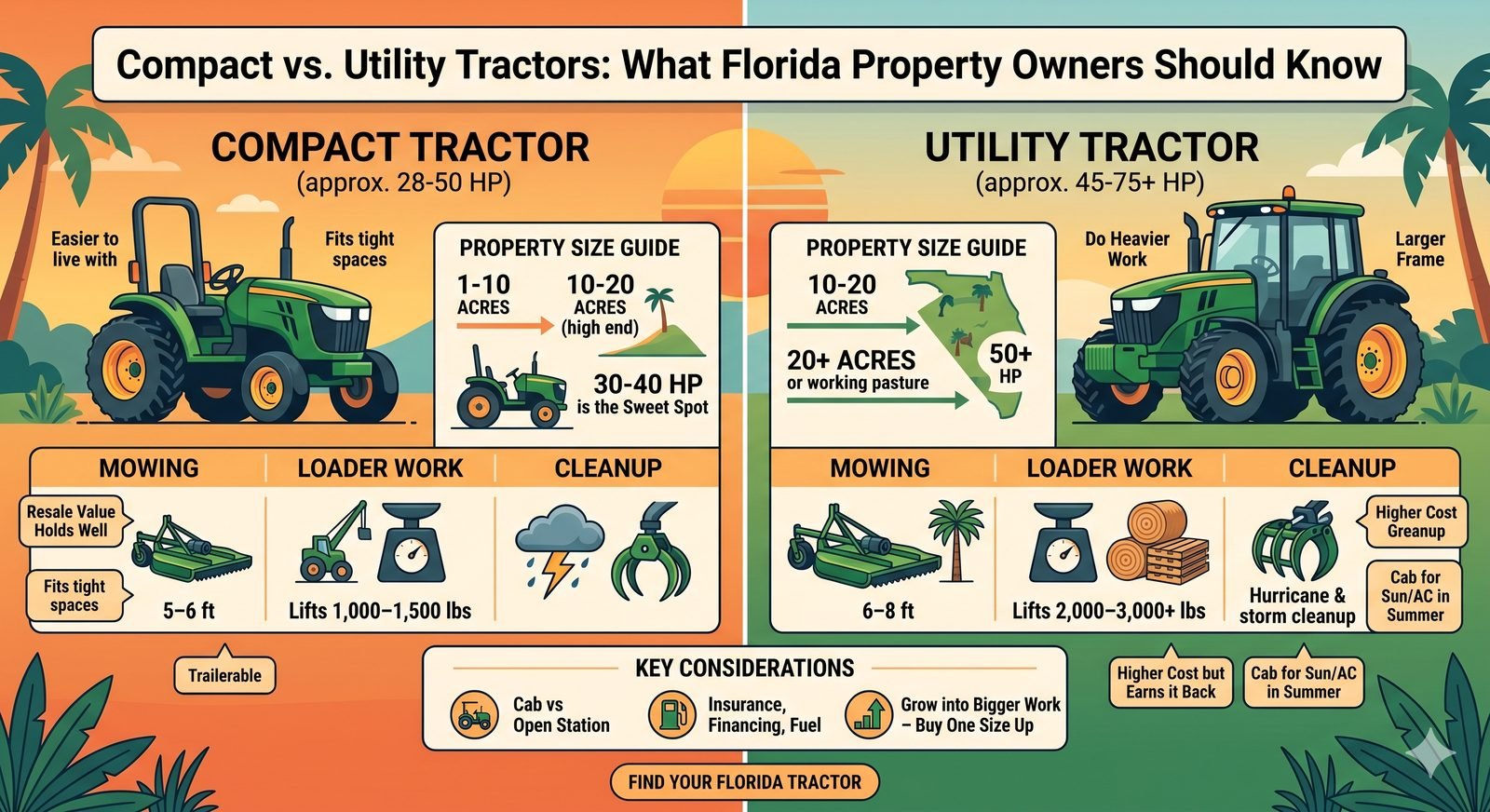
Florida buyers often ask whether they need a compact or a utility tractor. The line between them isn’t crisp, but the tradeoff is real: compacts are easier to live with, utilities do heavier work. Here’s how to decide for Florida property.
Quick definitions
- Subcompact: ~20–28 HP, light, easy to trailer, basic loader and PTO.
- Compact: ~28–50 HP, the sweet spot for most Florida acreage homes.
- Utility: ~45–75+ HP, heavier frame, larger 3-point hitch, bigger loaders.
- Above utility: dedicated farm tractors, less common on private property.
Florida property size guide
- 1–5 acres: subcompact handles most work, easy to trailer.
- 5–10 acres: compact in the 30–40 HP range hits the sweet spot.
- 10–20 acres: compact at the high end (40–50 HP) or small utility.
- 20+ acres or working pasture: utility tractor 50+ HP, often with cab.
How they differ in real Florida work
Mowing
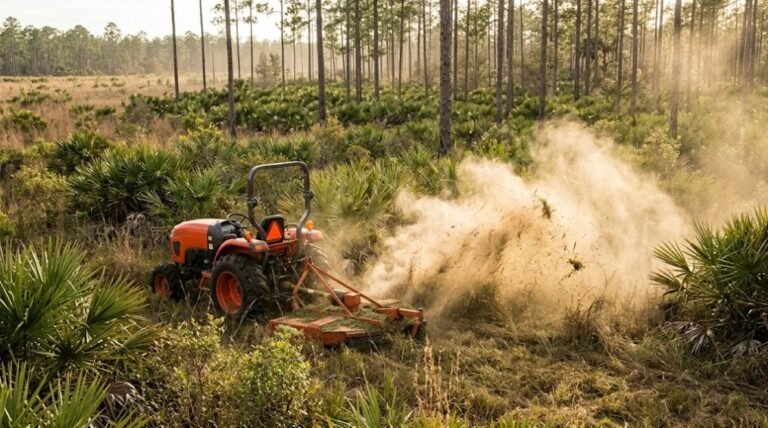
Compact tractors easily run 5- to 6-foot rotary cutters. Utility tractors handle 6- to 8-foot and laugh at palmetto. If you cut more than a couple of acres of brush, the utility wins.
Loader work
Compact loaders typically lift 1,000–1,500 pounds at full height. Utility loaders push past 2,000–3,000 pounds. Round bales, large pallets, and grapples full of storm debris reward weight.
Driveway grading
Both can grade with a box blade. Utility tractors carry heavier blades that bite better into Florida limestone driveways and stay flatter under load.
Storm and brush cleanup
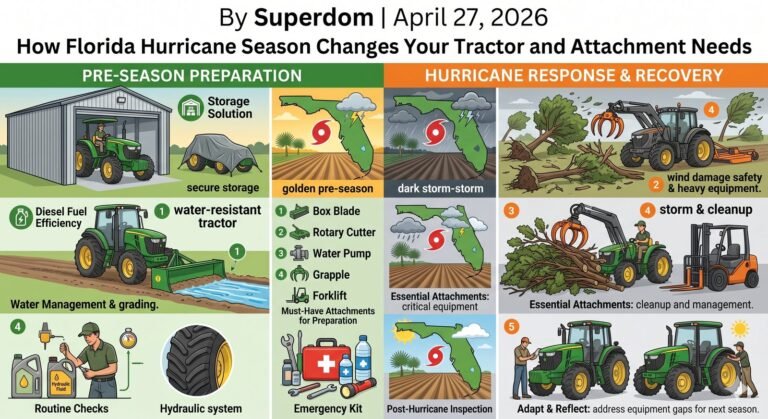
Hurricane and storm cleanup is where utility tractors earn their cost. Bigger grapple, more lift, more weight, more comfort with a cab. Compacts can do it but they get worked harder.
Cost and resale considerations
- Compact tractors hold value well in Florida — large secondary buyer pool.
- Utility tractors are pricier new and used, but heavier work earns the cost back faster.
- Cab vs open station: cabs are worth it in Florida for sun, rain, and AC during summer mowing.
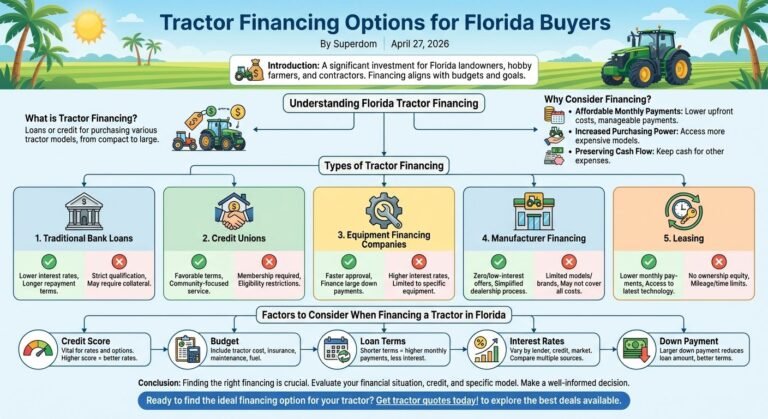
- Add insurance, financing, fuel, and maintenance into the comparison, not just sticker price.
Decision framework
- If most work is mowing 5–10 acres and small loader chores → compact, 30–40 HP.
- If you have palmetto, pasture, or storm cleanup is part of life → utility, 50+ HP.
- If you trailer often and storage is tight → compact wins on size and weight.
- If you’ll grow into bigger work over time → buy one size up from your current need.
What to do next
See our compact tractors page or used tractors page for size-specific guidance, then submit a request to get matched with the right Florida tractor and dealer resources.