If you own 5 to 20 acres in Florida, picking the right tractor size is one of the most important decisions you can make. Too small and the work takes forever. Too big and you overpay, run out of trailer rating, and struggle in tight Florida property layouts.
Florida-specific things that affect tractor size
Florida acreage is its own world. Sandy soils, palmetto and pine, summer thunderstorms, high water tables, and the occasional hurricane cleanup all shape the answer.
- Sandy soil reduces traction — heavier tractors and 4WD help.
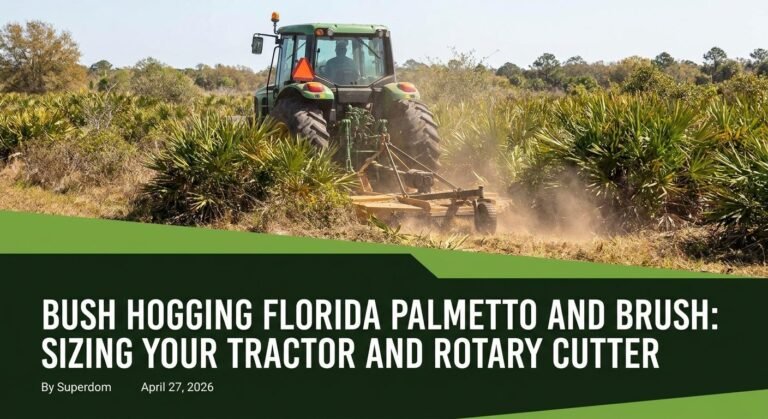
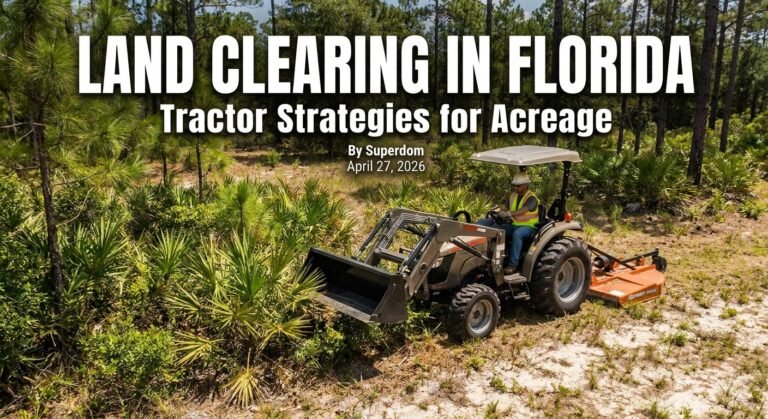
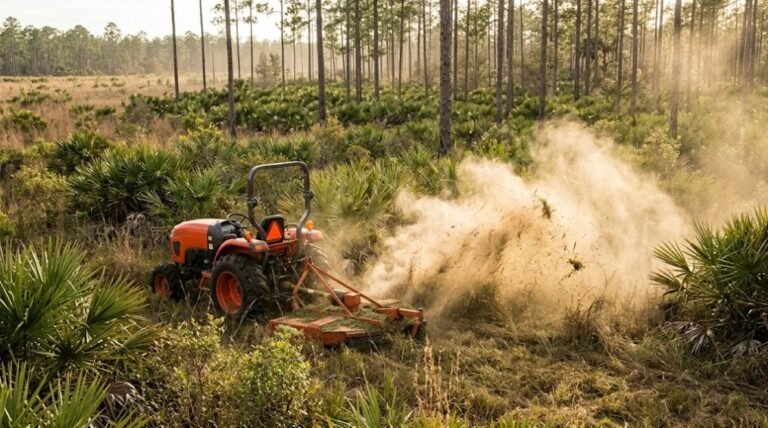
- Saw palmetto and dense brush demand a stout rotary cutter.
- Wet conditions during summer rains call for floatation tires.
- Limestone driveways need a box blade or land plane and the weight to keep it cutting.
- Hurricane cleanup means grapple work and lifting downed branches.
Rough horsepower guidelines by acreage
These numbers are general. Brush, terrain, and attachments matter more than acreage alone.
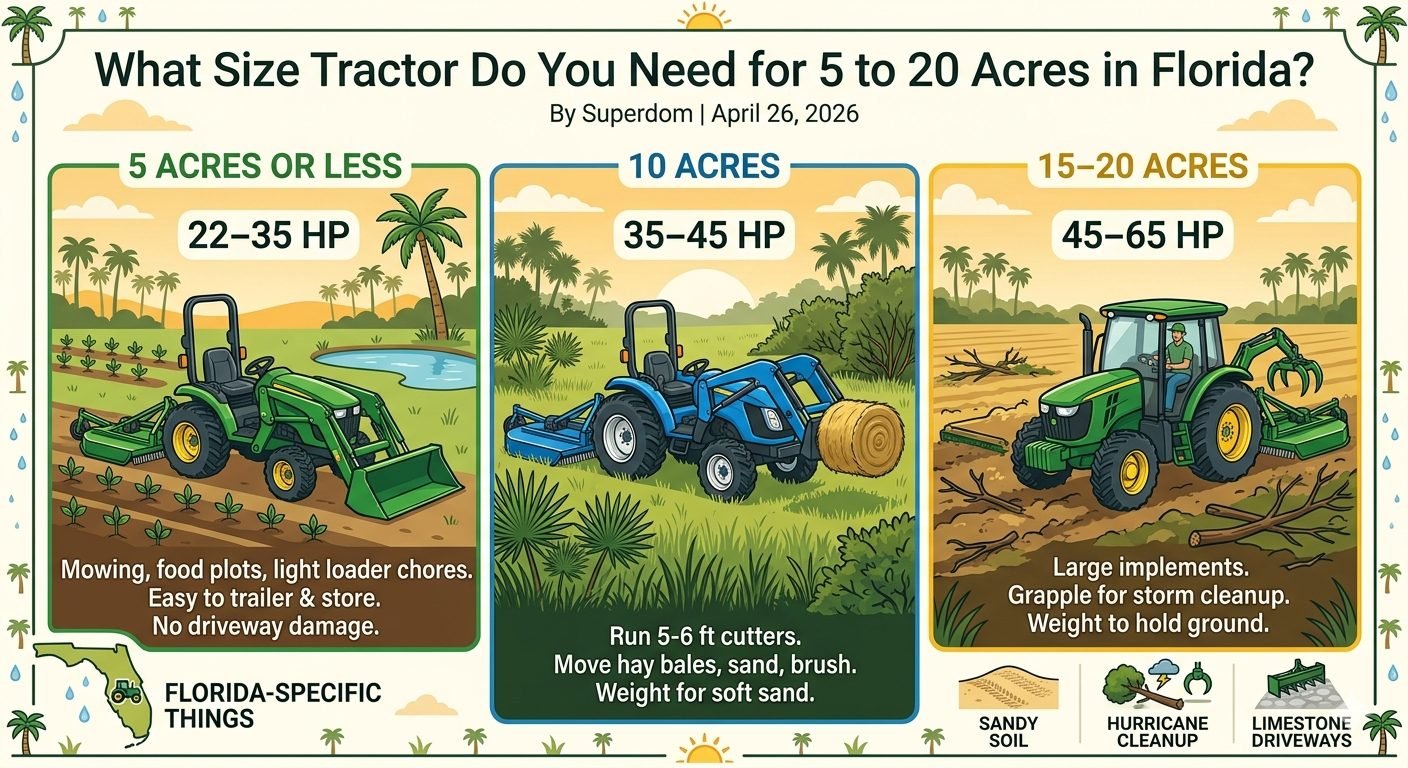
5 acres or less
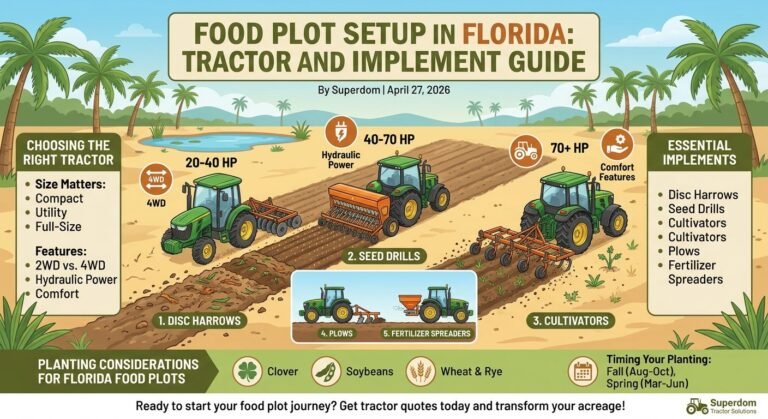
A subcompact (around 22–28 HP) or small compact (30–35 HP) is usually plenty for homestead-sized work: mowing, light grading, food plots, and loader chores. Easy to trailer and store, and you will not destroy your driveway with weight.
10 acres
A compact tractor in the 35–45 HP range hits the sweet spot for most Florida 10-acre properties. You can run a 5- to 6-foot rotary cutter, a 6-foot box blade, and a loader with enough lift for hay bales, sand, mulch, and downed brush.
15–20 acres
On 15 to 20 acres, especially with pasture, palmetto, or working land, look at 45–65 HP. Utility-class tractors handle larger implements (6- to 7-foot cutters, 6- to 8-foot box blades), rear remotes for hydraulic attachments, and the weight to hold ground in soft sand.
Don’t just chase horsepower
Two tractors with the same engine HP can feel completely different. Watch these numbers too:
- PTO horsepower (drives rotary cutters, tillers).
- Loader lift capacity (round bales need real numbers).
- 3-point hitch lift capacity and category (Cat 1 is fine for most compact tractors).
- Hydraulic flow if you plan to run a grapple or other hydraulic attachments.
- Tractor weight — sand, mud, and grading work all reward weight.
Match the attachment to the property
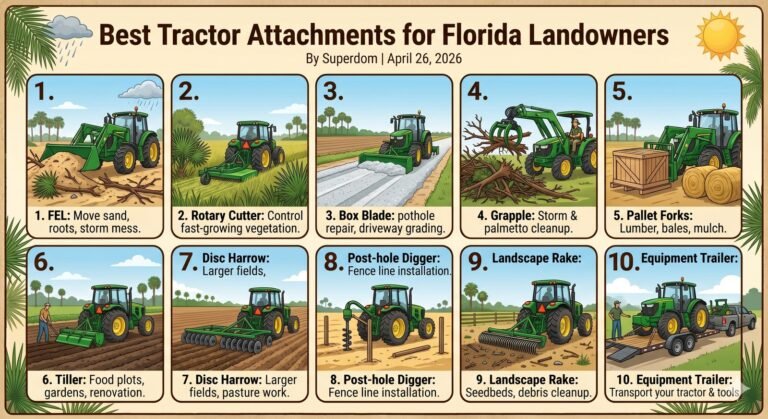
On most Florida acreage, the same handful of attachments do 90% of the work:
- Front-end loader for sand, mulch, brush, and round bales.
- Rotary cutter (brush hog) for pastures, food plots, and palmetto.
- Box blade for driveway grading and crowning.
- Grapple for storm cleanup and brush stacking.
- Pallet forks for material handling.
Browse common implements on our Florida attachments page before sizing the tractor — sometimes you size up just to swing a heavier cutter.
New vs used at each size
Used compact tractors with 1,000–2,500 hours and clean service records can be a great buy in Florida if you avoid units that lived hard outdoors near salt air. New tractors carry warranty, current emissions, and dealer parts support — useful for first-time owners. See our used tractor checklist if you lean used.
Get matched to a tractor that actually fits your property
Tell us your acreage, the work you do, and your timeline. We can help point your request toward Florida tractor and equipment resources that match your situation.