How Florida Hurricane Season Changes Your Tractor and Attachment Needs
Introduction: The Importance of Preparedness
Florida’s hurricane season can bring torrential rain, high winds, and flooding. For landowners, hobby farmers, contractors, and acreage owners, preparedness is essential to protect property, crops, and equipment. This guide will help you understand how to adjust your tractor and attachment needs to gear up for Florida’s hurricane season.
Understanding the Impact of Hurricanes on Your Land
1. Wind Damage and Equipment Safety
High winds can uproot trees, relocate fence posts, and damage buildings. Consider how vulnerable your tractor and attachments are to such conditions. Here are some key considerations:
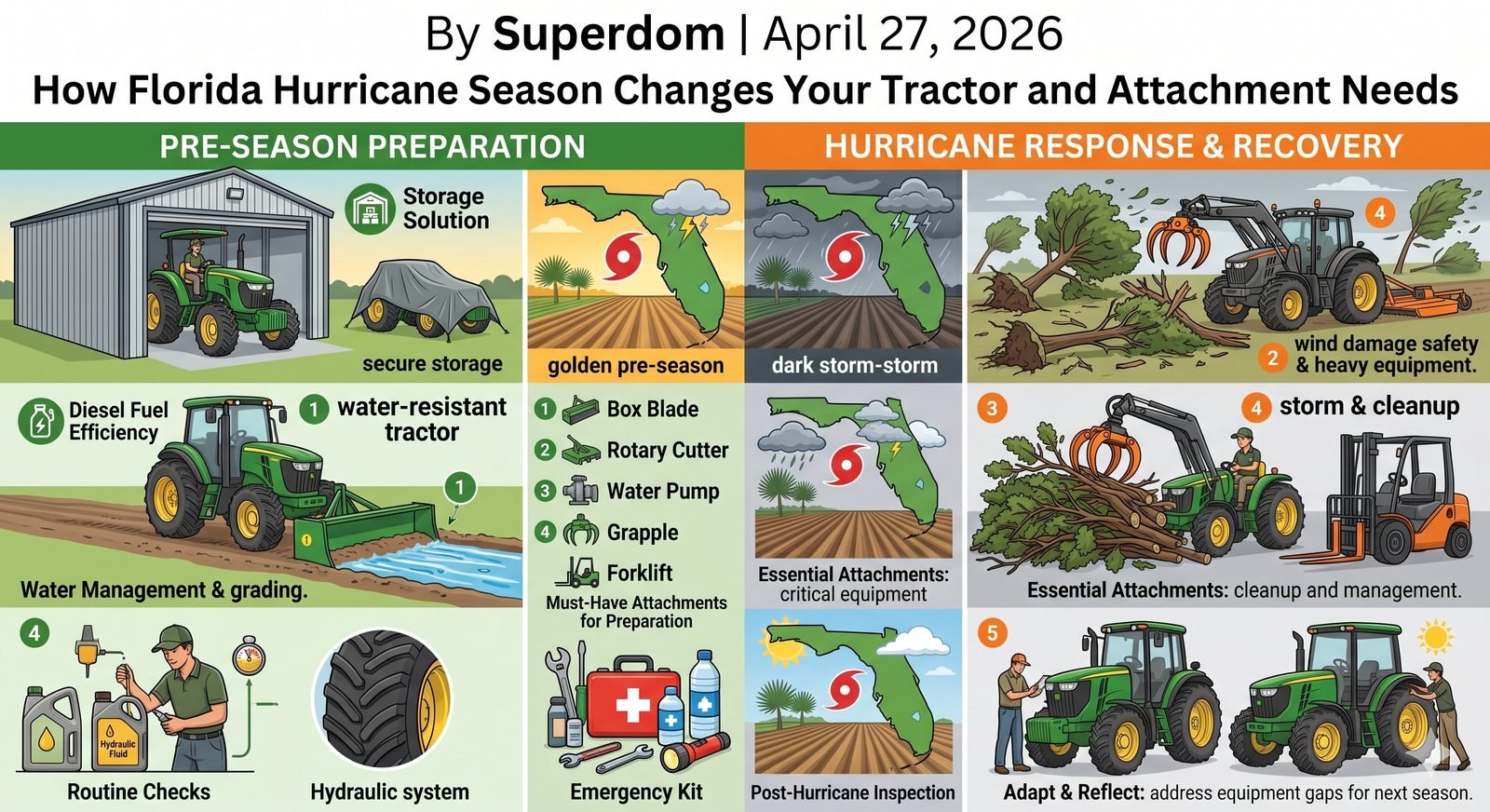
- Secure Storage: Invest in a storage solution such as a barn or enclosed trailer to protect your tractor from winds. If such storage isn’t available, consider using heavy tarps or tied-down covers designed for hurricane conditions.
- Weight Considerations: Heavy tractors will fare better in windy conditions. You might need to look for models that are built to stay grounded amid high winds.
2. Flooding and Water Management
Heavy rains lead to flooding, making it crucial for tractors to help manage water flow on your property. Here’s how to prepare:
- Water-Resistant Tractors: When selecting a tractor, consider models with higher water resistance or those designed for wet conditions.
- Essential Attachments: Having the right attachments can make a world of difference during a hurricane. Equipment like a water pump attachment can help manage excess water, while a box blade or land leveler is useful for maintaining proper drainage paths.
Key Tractor Features to Consider
1. Engine and Power
The size of your tractor engine should align with your needs. Consider:
- Power Output: Choose a tractor with enough horsepower for heavy-duty work—but don’t overlook smaller tractors for light tasks and maneuverability in tight spaces.
- Fuel Type: Diesel engines often offer better fuel efficiency, especially during extended use. This can be particularly useful if fuel supplies are strained during a storm.
2. Tire Size and Traction
Tires play a significant role in ensuring your tractor can maneuver through muddy or wet conditions:
- Tread Patterns: Opt for wider tires with deeper treads, as these will offer better traction in muddy or slippery conditions.
- Tire Upgrades: Consider investing in quick-change tire systems to easily replace or upgrade tires for both wet and dry conditions.
Must-Have Attachments for Hurricane Preparation
1. Box Blade
A box blade is invaluable for grading, leveling, and creating runoff channels to direct water away from your property.
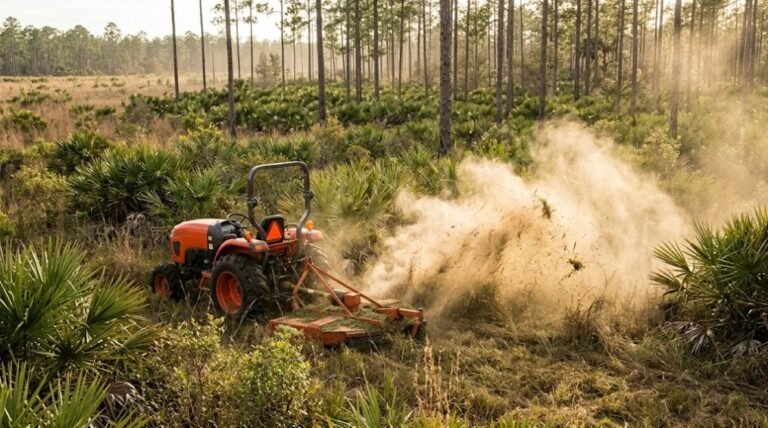
2. Rotary Cutter
Keeping the vegetation clear can lessen the risk of debris becoming a projectile in hurricanes. A rotary cutter can help you manage invasive species and maintain your landscape.
3. Water Pump
Equip your tractor with a reliable water pump attachment to expedite drainage during or after heavy rainfall. This can save your crops and potentially prevent flooding in your home.
4. Forklift Attachments
If parts of your property are prone to flooding, forklift attachments can help elevate critical supplies and equipment out of harm’s way.
Maintenance and Preparation
1. Routine Checks Pre-Season
As hurricane season approaches, consider the following maintenance routines for your tractor:
- Fluid Checks: Ensure all fluids (oil, hydraulic, coolant) are at appropriate levels to avoid breakdowns during critical times.
- Inspect Tires: Check for wear and ensure proper inflation to maximize traction.
2. Emergency Kit for Your Tractor
Prepare an emergency kit for your tractor including:
- Basic Tools: Have a selection of tools on hand for minor repairs.
- First Aid Kit: Accidents can happen, so ensure you’re equipped to manage minor injuries.
- Emergency Supplies: Stock non-perishable snacks, bottled water, and flashlights.
After the Hurricane: Recovery and Reassessment
1. Inspect Your Equipment
After hurricane events, promptly assess your tractor and attachments for damage:
- Structural Integrity: Check for bent frames or damaged components.
- Functionality Tests: Run through all functions of the tractor to determine if repairs are needed.
2. Reflect and Adapt
Use the post-hurricane period to reflect on what worked and what didn’t. Adjust your tractor and attachment arsenal accordingly:
- Evaluate Attachment Needs: Was there an attachment you wished you had? Address these gaps before the next hurricane season.
- Long-Term Solutions: If flooding was a significant issue, consider investing in more advanced drainage solutions or larger capacity tractors to handle the workload.
Hurricane season in Florida represents both a challenge and an opportunity for landowners and farmers. Understanding how your tractor and attachments need to evolve during this time is crucial for protecting your investment. By preparing ahead and adapting your equipment, you can mitigate the risks associated with hurricanes and ensure your land remains healthy and productive.
For further assistance in finding the right tractor to meet your needs, get tractor quotes and be ready for hurricane season.